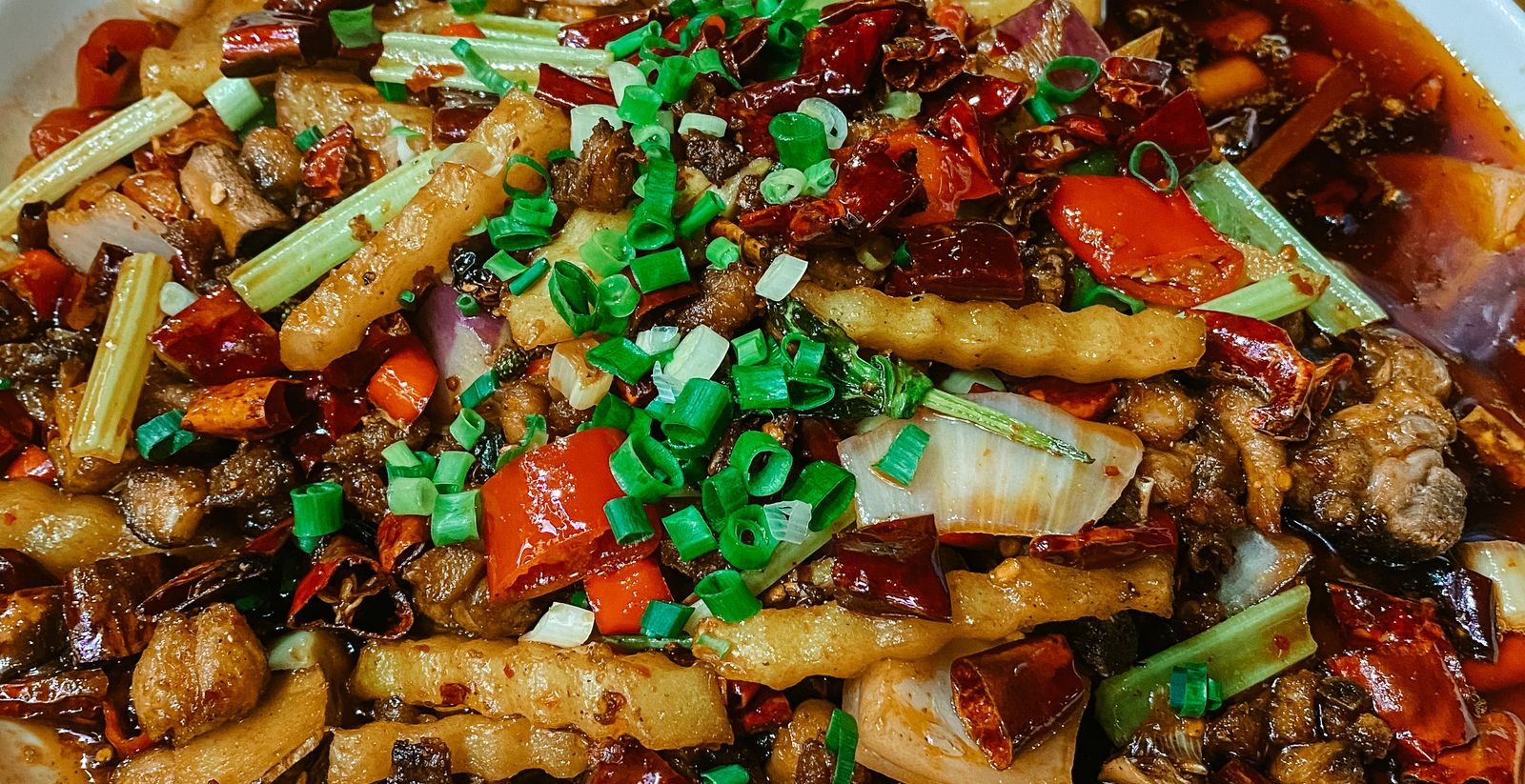
You do not need Chinese to order in China — you need geography. Cuisines follow regions, and choosing the right region beats memorising dish names.
Spicy or not
- The hot belt: Sichuan, Chongqing, Hunan, Guizhou, Jiangxi. Go straight for hotpot, chuanchuan and chopped-chilli fish; otherwise start on the divided pot or ask for “wei la” (mild).
- The mild coast: Cantonese and Jiangsu-Zhejiang cooking. Dim sum, white-cut chicken and steamed fish set the standard.
- Savoury, not spicy: Beijing and Shandong. Roast duck, copper-pot lamb, hearty braises.
Ordering, decoded
- Order a “hard dish” (a main meat) first, then one or two vegetables and a soup;
- “Li” = standard portion, “fen” = bigger, “wei” = per person;
- Rice is free-flow in the south, charged by the bowl in the north — just ask;
- Follow the longest lunch queue among office workers for the most local flavours.
Street food, done right
Morning markets and night markets are different sports: mornings are for steaming comfort (soy milk, hu la tang, rice rolls), nights for spectacle (skewers, stinky tofu, sweet soups). Vendors take cash and QR codes; keep small notes handy.
Table manners worth borrowing
Serving chopsticks are increasingly standard; serve elders and guests first; hold your glass slightly lower when toasting as a mark of respect. None of this is an exam — warmth matters more than form, and simply asking about a dish delights locals.