The short version
On the mainland your phone is your wallet, your map and your translator. Three things need to work the moment you land: paying, connecting, navigating. All three can be set up in 30 minutes before departure, so that on the ground it is just a scan.
1. Mobile payments: a foreign card is enough
Both Alipay and WeChat Pay accept foreign-issued Visa, Mastercard, JCB and Diners Club cards.
Alipay: install the app, register with a foreign phone number, then Me → Bank Cards → Add a foreign card. You will see a small pre-authorisation (roughly ¥1) that is released after verification.
WeChat Pay: WeChat → Me → Services → Wallet → Bank Cards. WeChat requires identity verification first; a foreign passport goes through the “overseas user” flow.
Fees and limits (current in 2026)
| Item | Alipay | WeChat Pay |
|---|---|---|
| Transactions up to ¥200 | No fee | No fee |
| Transactions over ¥200 | ~3% cross-border service fee on the full amount | ~3% cross-border service fee on the full amount |
| Per-transaction cap | US$5,000 | US$5,000 |
| Annual cap | US$50,000 | US$50,000 |
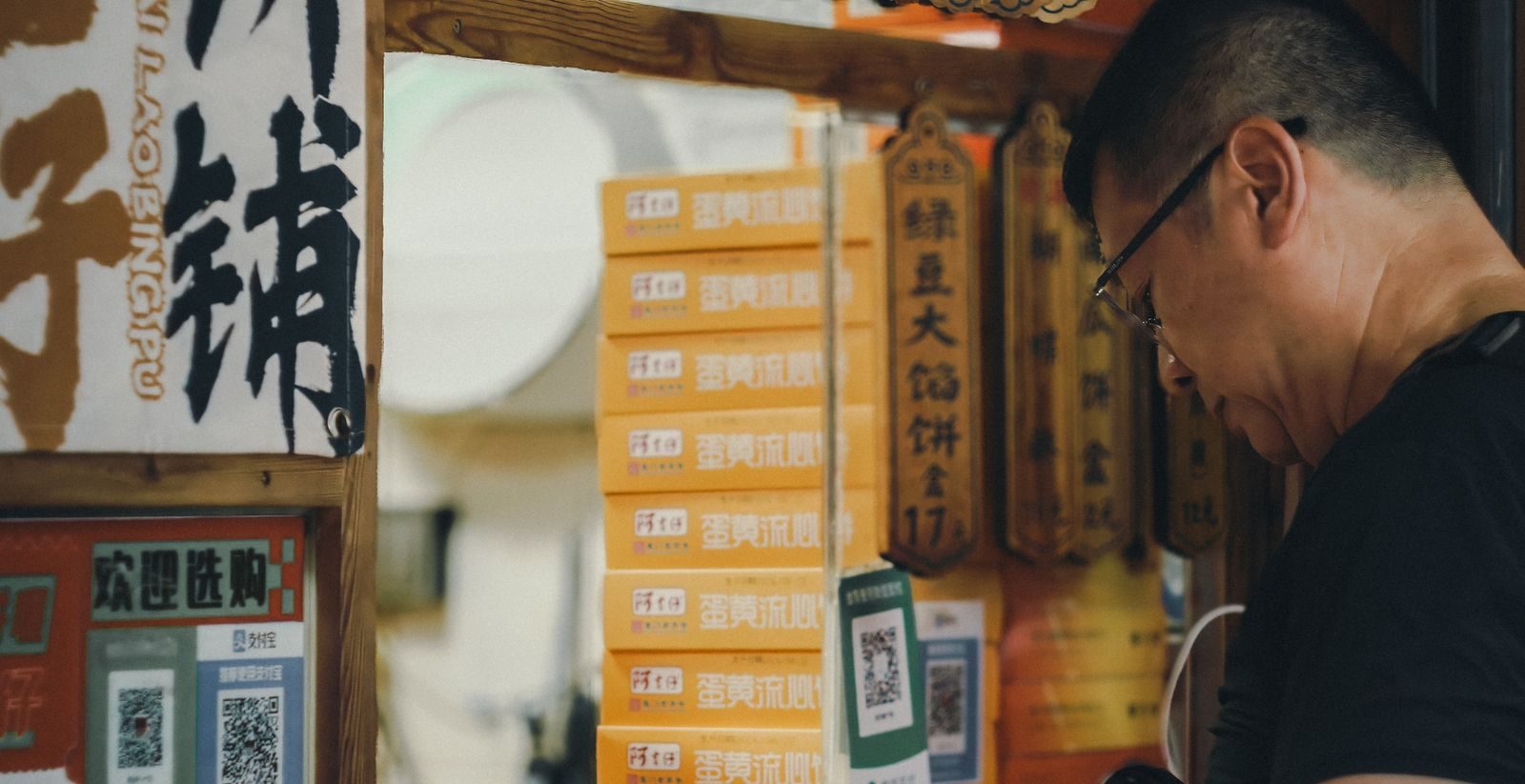
What that means: small, frequent purchases — metro rides, milk tea, street pancakes — cost you nothing extra. For big-ticket items (hotels, flights, luxury goods) paying with the physical credit card directly is cheaper. Three percent is not a rounding error on a large purchase, so do not assume the QR code is always the best option.
Do you still need cash?
Yes — ¥200–300 on you is plenty. Old-school snack shops, temple donation boxes and some county-town morning markets still take cash or only local QR codes. ATM withdrawals with a foreign card usually cost ¥15–30 per transaction, so take out enough at once.
2. Getting online: three options
| Option | Pros | Cons | Best for |
|---|---|---|---|
| International roaming on your own SIM | Works on landing, no SIM swap | High daily cost, some plans throttled | Short trips of 3–5 days |
| China data eSIM | No SIM swap, mid-range price | Phone must support eSIM and be unlocked | Most travellers |
| Local SIM card | Cheapest per GB, includes a local number | Passport registration and a trip to a store | Stays of two weeks or more |
Important: roaming and foreign eSIM data usually route through overseas gateways, so Google, WhatsApp and Instagram work normally. A local SIM uses the domestic network, where those services are not directly reachable. If you rely on Google Maps or Gmail, roaming or an eSIM is the smoother choice.
Arrivals halls almost always have carrier counters (China Mobile, China Unicom, China Telecom). Bring your passport; it takes about ten minutes.
3. Apps to install before you fly
- Amap (Gaode) or Baidu Maps — transit routing is more accurate than Google here, and both offer English interfaces;
- DiDi — ride-hailing, accepts foreign cards, English UI;
- Alipay / WeChat — payments;
- Dianping — finding local restaurants; far deeper coverage than TripAdvisor;
- A translator — Youdao or Google Translate, with the offline Chinese pack downloaded;
- 12306 — train tickets (the English website is easier than the app).
4. Three traps worth avoiding
- Do not wait until the till to add your card. Park signal is patchy and verification texts arrive late. Add the card early and run one small test payment.
- Know your two QR codes. The shop scanning you means showing your payment code; you scanning the shop means reading their collection code. They live in different places on the app home screen.
- Hotel Wi-Fi often wants a phone number. Many networks send a verification text — keep a number that can receive SMS, or just use mobile data.
Your first hour after landing
- Connect to airport Wi-Fi and confirm you are online;
- Open Alipay and WeChat and display a payment code to yourself (no payment — just confirm it generates);
- Open your map; a successful location fix means GPS and data are both fine;
- Take one DiDi from the airport to the hotel — the first ride doubles as a payment test.
Four steps, and the rest of the trip is just travelling. For visas and entry, see the visa-free policy explainer; if you plan to shop seriously, our tax refund guide gets 11% back in your pocket.